Learning to recognize letters, notice how they are formed, and connect them with familiar words is an important part of early literacy. These free alphabet tracing cards give young learners a simple way to explore all 26 uppercase letters while looking closely at pictures and listening to the beginnings of words.
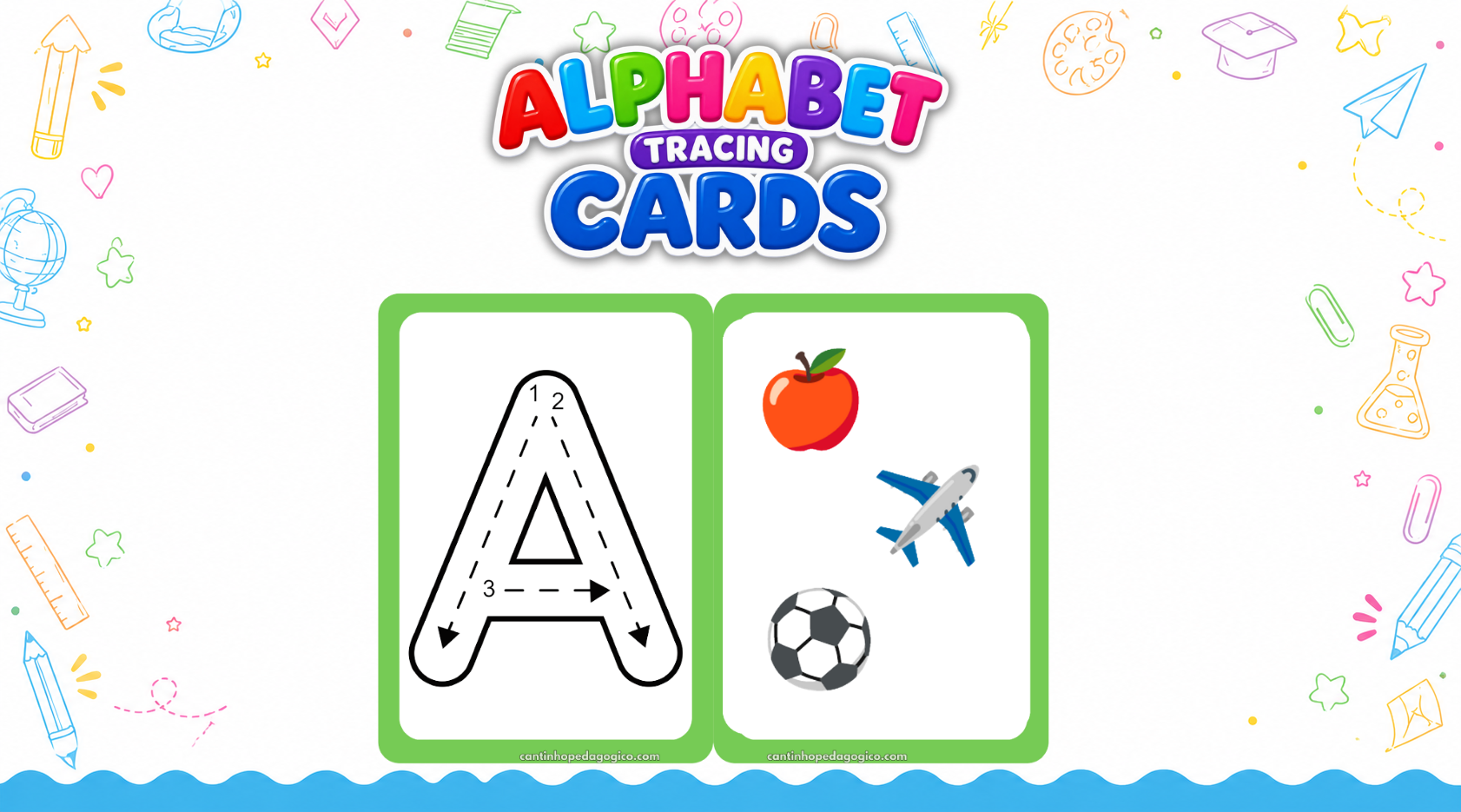
The printable includes one page for each letter from A to Z. On the left side, children will find a large uppercase letter with numbered strokes, dotted lines, and arrows. On the right side, they will see three pictures. Two picture names begin with the target letter, while one is the odd one out.
Children can trace the letter, name the pictures, compare the beginnings of the words, and identify the two correct choices. The set works well for preschool, pre-K, kindergarten, literacy centers, small-group instruction, homeschool activities, and targeted review.
What Is Included in the Printable?
The PDF contains 26 landscape A4 pages. Each page includes:
- one large uppercase letter;
- numbered strokes and arrows showing where to move;
- a dotted path for guided tracing;
- three colorful picture clues;
- two pictures whose names begin with the target letter;
- one unrelated picture that does not belong with the letter.
The cards can support letter recognition, letter formation, vocabulary, visual discrimination, beginning-letter awareness, and fine-motor practice. They are most effective when an adult helps children name the pictures and talk about their choices instead of treating the pages as independent drills.
Turn Vowel Practice Into a Fun Bingo Game!
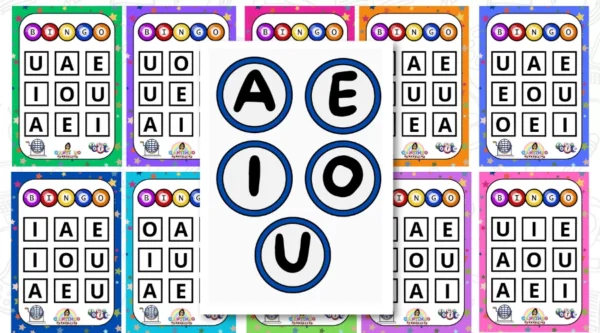
Enjoying the free Alphabet Tracing Cards? Keep learning through play with our printable Vowel Bingo for Kids.
- 20 printable Vowel Bingo cards
- Practice A, E, I, O and U
- Perfect for preschool & kindergarten
- Great for classrooms and homeschool
- Ready-to-print digital PDF
instant digital access
How to Use the Alphabet Cards
Introduce One Letter at a Time
Show the target letter and invite children to notice its shape. Does it have straight lines, curved lines, or both? Where does the first stroke begin? Can they find the same letter somewhere in the room or in a familiar name?
You do not need to use the cards in alphabetical order. Select letters that connect with classroom names, shared books, songs, current vocabulary, or the sequence used in your literacy program.
Name All Three Pictures
Before asking children to choose, make sure everyone agrees on the name of each picture. A picture can sometimes have more than one possible label. Since the task depends on the first letter of the word, children need to know which word is intended.
Say each word naturally and invite children to listen to its beginning. Avoid adding an extra vowel to consonant sounds. For example, the sound for M should not be pronounced as “muh” when children are comparing the beginning of words.
Find the Two Matching Pictures
Explain that two picture names begin with the target letter and one picture is the odd one out. Children can point to the answers, circle them, cover them with counters, or clip the correct side with clothespins.
Ask children to explain how they made their choice. If they are unsure, repeat the words, compare two at a time, and connect the letter with another familiar example.
Trace with a Finger First
Before using a pencil or marker, let children follow the numbered path with a finger. They can also drive a small toy car along the letter, place yarn or play dough over the outline, or use a dry paintbrush to follow the strokes.
This hands-on exploration helps children understand direction and sequence without requiring precise pencil control immediately.
Trace the Letter
When children are ready, offer a crayon, triangular pencil, or dry-erase marker. Draw attention to the starting point and arrows, but do not expect perfectly formed letters. Letter tracing should be brief, supported, and combined with playful language experiences.
Important Notes About Letters and Sounds
The printable is designed primarily as a beginning-letter activity. Most picture pairs also provide useful beginning-sound practice, but English spelling does not always have a one-letter, one-sound relationship.
For example, the letter G appears in both giraffe and grapes, but it represents different sounds. The letter X is also special: xylophone begins with a sound similar to Z, while X-ray begins with the spoken letter name. Use these cards to notice the written letter and then explain the sound difference rather than telling children that every example has exactly the same sound.
This distinction keeps the activity accurate and helps children understand that letters can represent different sounds in different words.
Ways to Extend the Activity
Classroom Letter Hunt
Choose one card and look for classroom objects whose names begin with the same letter. Children can draw the objects, photograph them, or place them near a large letter card.
Picture Sorting
Display two or three letter cards and provide separate picture cards. Invite children to sort each picture under the letter that matches its beginning. Begin with letters that have clearly different sounds.
Odd-One-Out Game
Cover the printed letter and show only the three pictures. Ask which two words begin with the same letter and which picture is the odd one out. Reveal the letter after children share their ideas.
Name Connections
Connect the cards with children’s names. Place names beside the matching first letter or create a class alphabet chart. Respect children who prefer not to have their names used publicly.
Build Simple Words
Learners who already recognize many letters can combine cards to build names or short words. Use movable letters alongside the cards so children can compare forms.
Alphabet Order
Place a small group of cards in order and ask which letter comes before, after, or between. Increase the number of cards as children become more confident.
Preparing the Cards for Reuse
Print the pages on regular paper or card stock. For repeated use, laminate them or place them inside dry-erase pockets. Children can then trace with washable dry-erase markers and wipe the cards clean.
Store the set in smaller groups instead of displaying all 26 pages at once. A limited selection can reduce visual overload and makes it easier to focus on the letters being taught.
The file uses A4 landscape pages. If you are printing on US Letter paper, select “Fit to printable area” or a similar scaling option so the borders are not cut off.
Supporting Different Learners
Children do not need to hold a pencil to participate. They may point, speak, use eye gaze, place counters, or touch the correct pictures. The tracing path can be explored with a finger, yarn, play dough, or a small object.
For children who need additional visual support, show one card at a time and temporarily cover pictures that are not being discussed. You can also enlarge the page or use a high-contrast print setting.
Learners who need a greater challenge can name additional words that begin with the letter, draw their own picture clues, or write a word beside the card. The goal is meaningful participation, not completing every page in the same way.
Skills Children Can Practice
With appropriate adult support, the activity can help children practice:
- recognizing uppercase letters;
- following a guided letter-formation path;
- naming familiar objects and animals;
- noticing the beginning letters in words;
- comparing and sorting picture clues;
- expanding oral vocabulary;
- coordinating hand and finger movements;
- explaining choices and listening to others.
A printable cannot teach all of these skills by itself. Conversation, modeling, repeated exposure, books, songs, play, and opportunities for independent writing remain essential parts of early literacy learning.
Frequently Asked Questions
What age are these alphabet cards for?
They are best suited to preschool, pre-K, kindergarten, and children who are beginning to recognize and form uppercase letters. Adjust the task to each learner’s development.
Do all three pictures begin with the target letter?
No. Two picture names begin with the target letter, and one is the odd one out. Children should name and compare the pictures before choosing.
Should I teach the cards in A-Z order?
Not necessarily. You can follow your literacy curriculum, begin with meaningful letters from children’s names, or select letters that appear in a shared book or classroom theme.
Can the cards be laminated?
Yes. Lamination or dry-erase pockets make the printable reusable and work well in literacy centers.
Are these beginning-sound cards?
They support beginning-sound awareness on many pages, but the primary task is matching pictures to their beginning written letter. English letters such as G and X require explicit explanation because the sounds are not identical across the examples.
Download the Free Alphabet Tracing Cards
The English edition includes all 26 uppercase letters and picture sets selected for English words. Use the cards individually, in small groups, or as part of a literacy center.